Nanisca
Sigma Digital · South Africa (remote) · Sept 2025 – Aug 2026
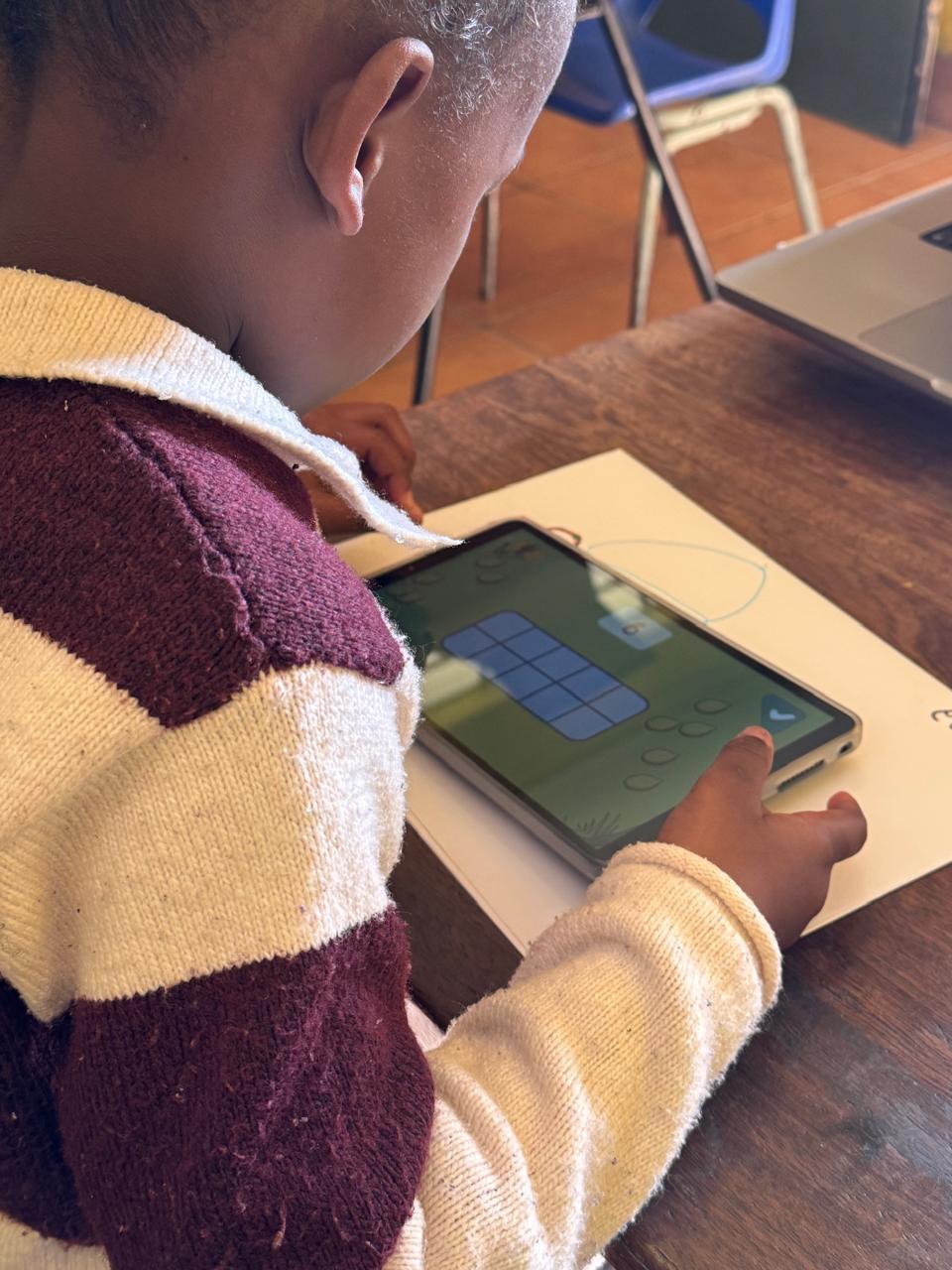
An educational gaming platform built from the ground up for first- and second-grade children in Africa, delivered on low-cost Android tablets.
I joined as Lead Gameplay Programmer, hired the programming team, and led it as technical lead for eleven months, owning the architecture, running code review, and driving sprint planning with a distributed South African team.
Nanisca is a private client project and is not publicly available.
What I Built
UI Framework
Designed the platform's shared UI framework: a grid-based container providing a progress bar, corner buttons, and an animated teacher demo system used by every activity on the platform. Migrating all activities onto this framework was a prerequisite for the architectural work that followed.
MVVM + FSM Architecture
Designed and introduced an MVVM + finite-state-machine architecture adopted across all activities. The pattern decouples game logic from presentation: each activity's rules live in a Model and ViewModel tested in isolation, while FSM states make the activity's flow explicit and auditable. I created the scaffold, wrote the migration playbook, and led the team through migrating every activity onto it.
Six Curriculum-Aligned Mini-Games
Delivered six mini-games mapped to a first- and second-grade reading and writing curriculum, with two rounds of playtesting with the target age group. Each activity shares core mechanics through the framework, so curriculum content is swappable without rebuilding the underlying game logic.
Educator Collaboration
Worked directly with educators and instructional designers across time zones to translate curriculum goals into game mechanics, bridging educational theory and interactive design in each sprint.
Tooling & CI
Built a PCK Builder editor plugin for configuring and exporting activity packages at runtime, and improved the CI pipeline for automated linting and test runs on every pull request.